Round Rock’s Downtown Historic District Nominated for Opportunity Zone
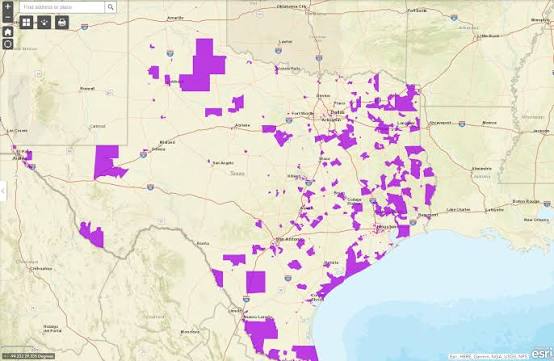
Round Rock has been selected for nomination under the federal government’s renewed Opportunity Zone 2.0 program. Census Tract 207.01, which covers the city’s downtown and historic district, has been put forward for designation as a Qualified Opportunity Zone starting in 2027.
The nomination is part of a broader statewide process. Under the One Big Beautiful Bill Act (OBBBA), signed into law in July 2025, the original Opportunity Zone program, first created by the 2017 Tax Cuts and Jobs Act, was made a permanent part of the federal tax code. That law also triggered a new nomination cycle, known as Opportunity Zone 2.0, that will refresh the map of designated low-income census tracts eligible for capital gains tax incentives.
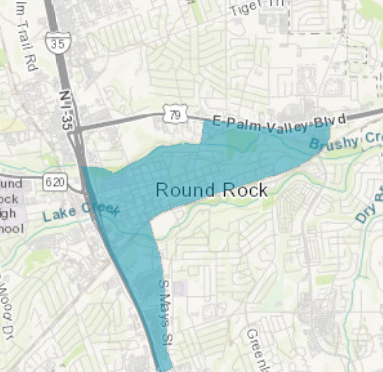
Round Rock’s proposed Opportunity Zone includes Census Tract 207.01 covering the city’s downtown and historic district
How the process worked
Texas Governor Greg Abbott’s office, through the Texas Economic Development & Tourism Office (EDT), led the state’s selection effort. EDT asked local economic development organizations and county officials to nominate eligible tracts in their communities, weighing factors such as federal eligibility, local incentive support, and investment readiness. The Texas Economic Development & Tourism Office asked economic development organizations and county judges to submit eligible tracts in their communities for consideration, giving strong weight to tracts where the local community would back the designation through incentives, rebates and agreements.
Texas submitted its final list of nominated tracts to the U.S. Department of the Treasury on September 4, 2026. The state nominated 605 census tracts out of 2,420 that met the eligibility criteria under the 2020 to 2024 American Community Survey data. Round Rock’s Census Tract 207.01 was among the tracts included in that submission. Official Treasury certification of the nominations is expected by November 28, 2026.
What changes on January 1, 2027
The new Opportunity Zone map is set to take effect January 1, 2027, with designations remaining in place for 10 years and the map refreshed again every decade going forward. That’s a shift from the original 2018 program, which locked in one map for the better part of a decade with no scheduled renewal, until OBBBA made the incentive permanent and put it on a recurring cycle.
The tax benefit at the center of it all
Opportunity Zones work by giving investors a tax incentive to reinvest capital gains into economically distressed communities rather than parking that money elsewhere. Investors who reinvest eligible capital gains into a Qualified Opportunity Fund, which in turn deploys that capital into property or businesses within a designated tract, can qualify for preferential federal tax treatment. In practice, that means an investor who sells stock, a business, or real estate at a profit can defer, and under certain holding periods partially or fully avoid, capital gains tax by channeling those proceeds into qualifying projects inside Round Rock’s newly nominated tract.
Why downtown Round Rock
The designation lands on a stretch of the city that’s already the focus of a significant public investment push. The city’s Planning and Development Services Department was recognized earlier this year for its updated downtown zoning framework, which builds on a 2010 master plan calling for a walkable, mixed-use town center that respects the area’s historic character. Since 2010, the City has invested nearly $200 million in downtown infrastructure and public improvements, and the recent zoning update was designed to align those investments with opportunities for private development. An Opportunity Zone designation would layer a federal tax incentive on top of that groundwork, giving private investors an added reason to put capital into new construction, adaptive reuse of historic buildings, or business expansion in the district.
What it could mean for the city
For Round Rock, the practical upside of the designation is the potential to draw private investment dollars that might otherwise go to communities without the same tax advantage. Nationally, the first round of Opportunity Zones drew billions in investment; a preliminary Treasury analysis found that roughly $44 billion was invested in Opportunity Zones through qualified opportunity funds between 2018 and 2020 alone, and supporters of the 2.0 program are hoping the permanent, decade-long structure will make that kind of capital even more durable and predictable.
Because the incentive is investor-driven rather than a direct grant or subsidy, the actual pace and scale of new development in the tract will depend on how quickly private developers and fund sponsors move to take advantage of the designation once it’s certified. Still, city officials frame the nomination as a meaningful marketing and financing tool: it signals to national investors that downtown Round Rock is now formally in the pool of communities eligible for one of the more attractive federal tax breaks available for long-term capital.
Contact Us. We’re Here to Help.
Get in touch with our team to learn more about how the Round Rock Chamber can help.